
This cooperative project originated at a rural network meeting at the end of 2019, where the coordinator of the Local Action Group (LAG) met the representatives of the Greek LAGs. It is being carried out with the support of the European LEADER Fund and the Région Sud, with the Haute-Provence Luberon Local Action Group (LAG) as a partner.
Green Vinum is a collaborative project involving five partners: three LAGs in Greece, covering the regions of Thessaloniki and Mount Olympus; one LAG in France (Haute-Provence Luberon) and the Luberon AOC.
These five partners are implementing programmes under the European CLLD/LEADER initiative in different regions across Europe. The project aims to assess the current state of viticulture and improve the competitiveness of small and medium-sized winemaking and distilling businesses by promoting good environmental practices, particularly in the areas of energy efficiency, raw material management and waste management throughout the production process.
The Green Vinum project was carried out in three phases.
Visits & exchanges
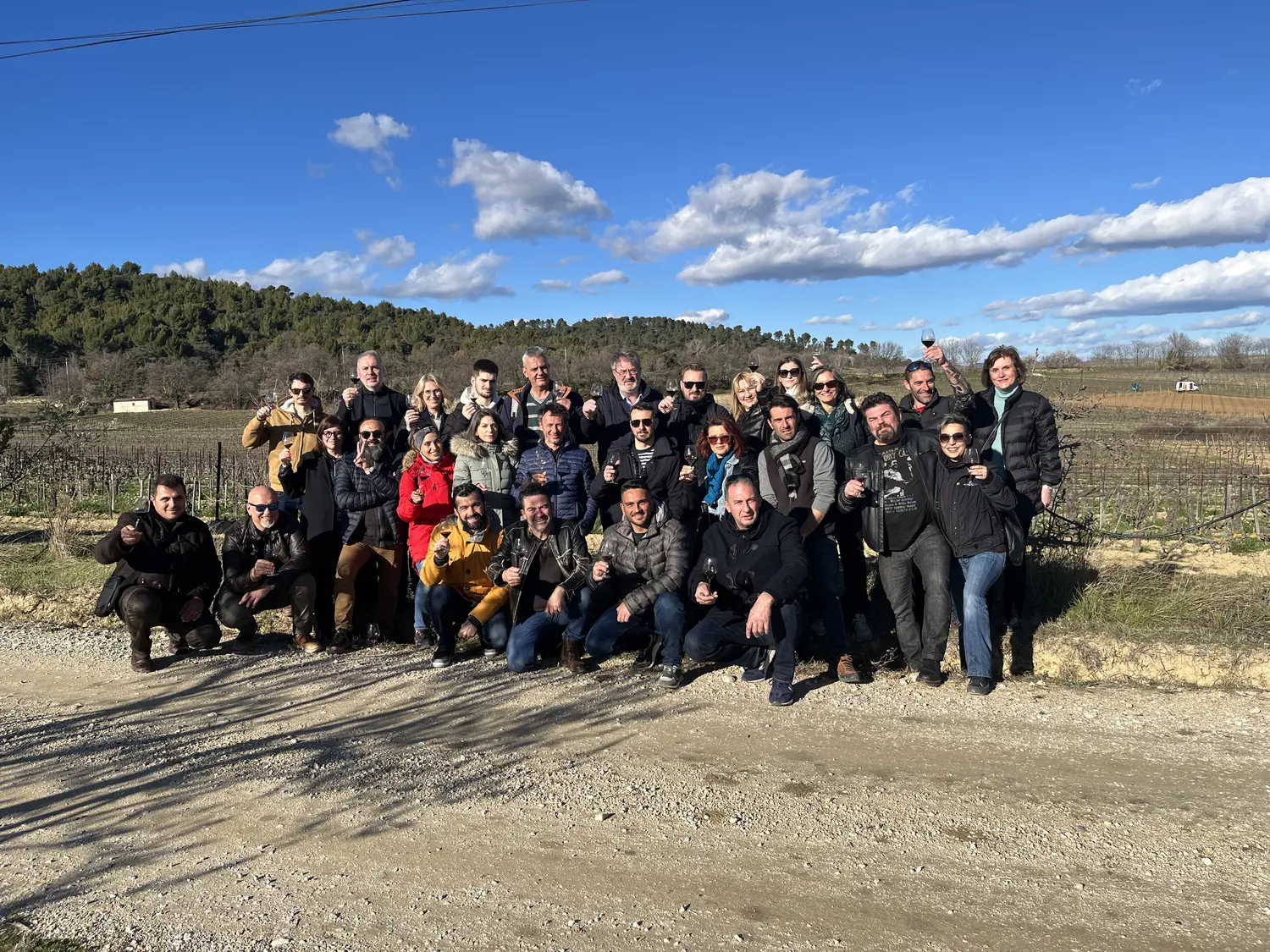
Three study visits to the Thessaloniki region and Mount Olympus in Greece.
Joint programme
- A review of existing literature to identify best practices in the project's three focus areas.
- A survey of French and Greek wine producers to ascertain their level of engagement in each area, along with their motivations, the barriers they face and the factors that encourage action.
- A guide to best practices produced by the French Vine and Wine Institute (IFV).
Local actions
- A study commissioned from INRAE on the impacts of climate change in the Luberon.
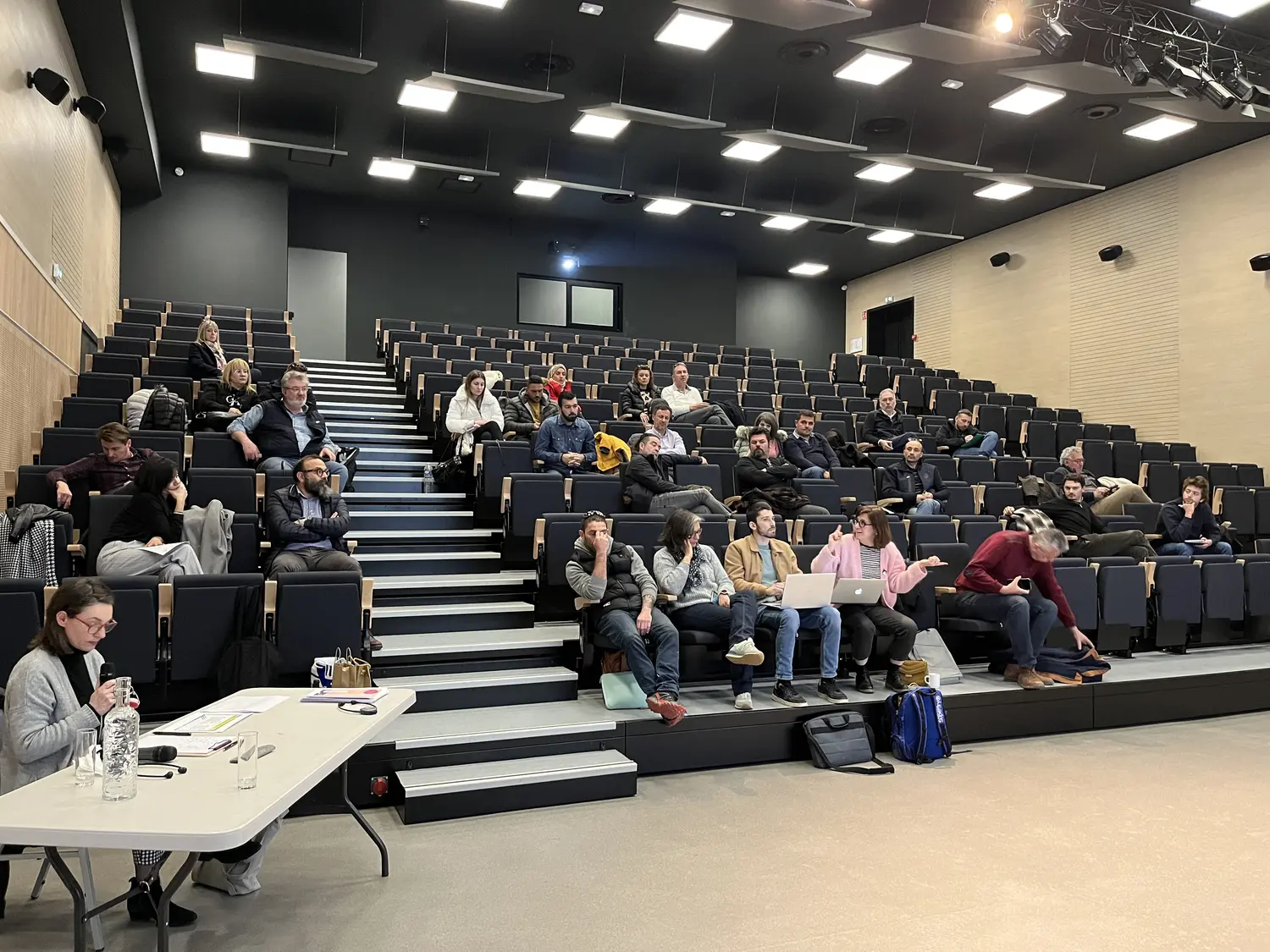
- A presentation day including a Climate Fresk workshop.
During the course of the project, we conducted a systematic review of the existing literature to identify best practices for improving water and energy use, as well as production practices, in the wine industry. The review identified several best practices, including:
- 22 measures to promote sustainability,
- 19 measures to support climate change adaptation,
- 21 measures to improve energy efficiency.
Climate change adaptation in wine production is often regarded as highly dependent on local conditions. A better understanding of the underlying adaptation processes is needed, together with more targeted measures that take local variations into account and facilitate the transfer of best practices to other wine-producing regions.